Ghost production: o mercado invisível que faz metade dos hits que você ouveGhost production: the invisible market behind half the hits you hear
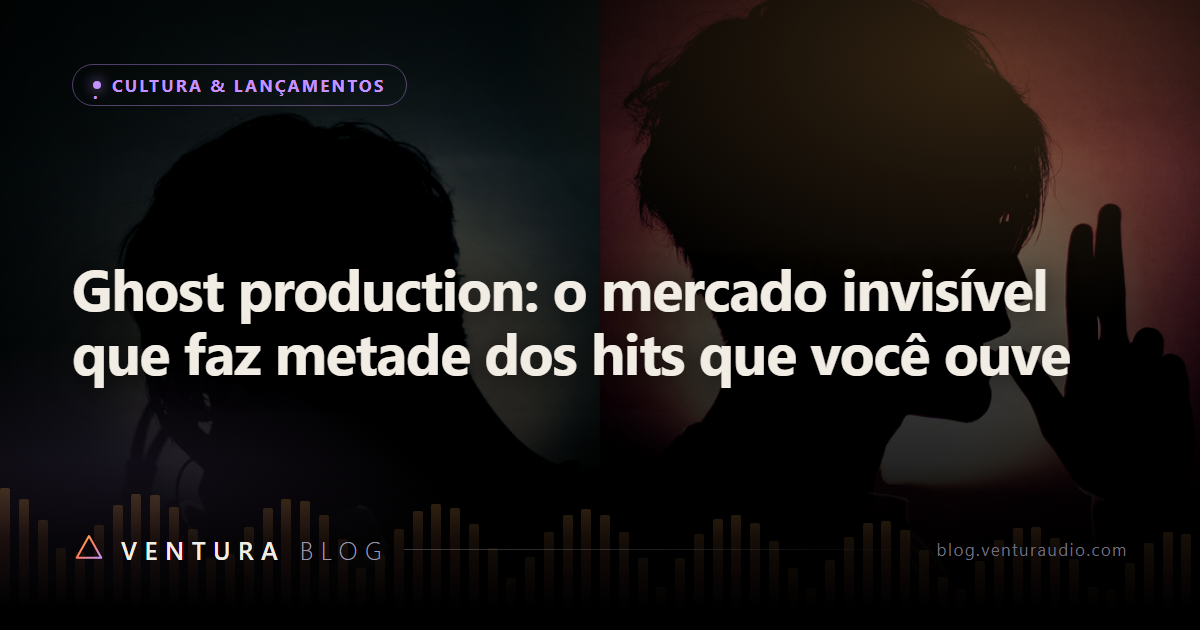
Foto: diloz · CC BY
O acordo que ninguém assina em público
Ghost production é isso: você produz a faixa inteira, entrega, recebe e o nome que aparece no lançamento é de outra pessoa. Não é plágio, é um contrato. E é muito mais comum do que a indústria admite.
O modelo nasceu na cena de EDM, onde um DJ que vive de shows tem calendário lotado demais pra passar semanas dentro do Ableton, mas ainda precisa lançar faixa nova todo trimestre pra manter a relevância no algoritmo do Spotify e nos line-ups de festival. A solução foi terceirizar a produção mantendo o nome que vende ingresso. De lá, o modelo se espalhou pra K-pop, pra trap latino e pra boa parte do pop mainstream, onde equipes inteiras de compositores e produtores entregam faixas sob NDA (acordo de confidencialidade) pra um artista que grava o vocal e assina o lançamento.
Como o pagamento funciona na prática
Existem basicamente dois modelos, e a diferença entre eles decide se você ganha bem ou ganha uma vez só:
- Flat fee (cachê fechado): você recebe um valor fixo pela faixa pronta, entrega o instrumental (ou a produção completa) e abre mão de qualquer participação futura. Pra artistas de nicho ou DJs de circuito médio, esse valor costuma ficar na faixa de algumas centenas a poucos milhares de dólares por faixa, dependendo da complexidade e do nome do contratante.
- Points (pontos de royalty): em vez de cachê fechado, você negocia uma fatia do writer's share, a parte de royalty editorial que cabe a quem compôs. Isso significa receber por streaming, rádio e sincronização pelo resto da vida da música, só que sem aparecer nos créditos públicos, apenas no registro junto à editora ou à sociedade de arrecadação.
O segundo modelo paga muito mais a longo prazo se a faixa estourar, mas a maioria dos ghost producers iniciantes aceita o flat fee porque precisa de caixa agora e não tem poder de negociação pra exigir pontos.
O que perguntar antes de assinar
Três perguntas decidem se o contrato é justo:
1. Quem fica com os direitos autorais da composição? Se a resposta é "o artista fica com 100 por cento", você está vendendo trabalho de compositor pelo preço de serviço técnico.
2. O NDA tem prazo? Alguns contratos proíbem você de citar a faixa no portfólio para sempre. Peça uma cláusula de prazo, mesmo que sejam só dois ou três anos.
3. Existe cláusula de recompra se a faixa não for lançada? Faixas engavetadas travam seu catálogo sem gerar nenhum retorno.
Vale a pena?
Como porta de entrada para quem ainda não tem nome no mercado, sim: ghost production paga contas enquanto constrói repertório e referências reais de trabalho com artistas que já têm audiência. Como modelo de carreira permanente, é arriscado: você constrói o catálogo de outra pessoa em vez do seu.
Ghost production não é problema de ética, é problema de contrato. O erro não é aceitar trabalhar sem crédito, é aceitar sem entender o que está assinando.
The deal nobody signs in public
Ghost production works like this: you produce the entire track, deliver it, get paid, and someone else's name goes on the release. It's not plagiarism, it's a contract. And it happens far more often than the industry likes to admit.
The model was born in the EDM scene, where a DJ living off touring has a calendar too packed to spend weeks inside Ableton, yet still needs a new single every quarter to stay relevant on Spotify's algorithm and on festival lineups. The fix was to outsource production while keeping the name that sells tickets. From there the model spread into K-pop, Latin trap, and much of mainstream pop, where entire teams of writers and producers deliver tracks under NDA (non-disclosure agreement) to an artist who records the vocal and takes the release credit.
How the money actually works
There are basically two payment models, and the difference between them decides whether you get paid once or paid for life:
- Flat fee: you get a fixed amount for the finished track, hand over the instrumental (or full production), and give up any future share. For niche artists or mid-circuit DJs, this typically lands somewhere between a few hundred and a few thousand dollars per track, depending on complexity and the buyer's name.
- Points: instead of a flat fee, you negotiate a slice of the writer's share, the portion of publishing royalties that belongs to whoever composed the song. That means getting paid from streaming, radio, and sync for the life of the track, just without appearing in the public credits, only in the registration filed with the publisher or the collecting society.
The points model pays far more long term if the track blows up, but most beginner ghost producers take the flat fee because they need cash now and have no leverage to demand points.
What to ask before you sign
Three questions decide whether the deal is fair:
1. Who keeps the copyright on the composition? If the answer is "the artist keeps 100 percent," you're selling songwriter work at the price of a technical service.
2. Does the NDA have an expiration date? Some contracts ban you from ever listing the track in your portfolio. Ask for a time limit, even if it's only two or three years.
3. Is there a buyback clause if the track never gets released? Shelved tracks lock up your catalog without ever generating a return.
Is it worth it?
As an entry point for producers without a name in the market yet, yes: ghost production pays the bills while building real working references with artists who already have an audience. As a permanent career model, it's risky: you're building someone else's catalog instead of your own.
Ghost production isn't an ethics problem, it's a contract problem. The mistake isn't working without credit, it's signing without understanding what you agreed to.
Plugins que você enxergaPlugins you can see
Conheça o PRISMA e o catálogo Ventura Audio.Meet PRISMA and the Ventura Audio catalog.
IR PARA A LOJAGO TO STORE